

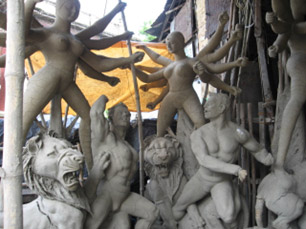
Kumartoli, a traditional potters' area in Kolkata, West Bengal, is famous for its skilled artisans who make beautiful clay idols, especially for Durga Puja, Kali Puja, Saraswati Puja, and Laxmi Puja. Kumartoli has a history that goes over 300 years. It started as a colony for potters (kumars) hired by the British East India Company to produce household items. The principal material used is Ganges River bank clay. Artisans use straw, bamboo, and jute to create the base structure of the idols. They sculpt the facial features and other details. The idols are then painted, paying attention to the eyes, a process called "Chokkhu Daan" (eye-giving). Kumartoli idols are currently shipped all over the world, catering to the Bengali community.
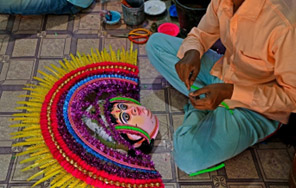
The Chhau dance and its masks have a long history in West Bengal's Purulia district. The dance form is considered to have developed from martial arts training exercises. Chhau masks are usually composed of papier-mâché, clay, and mud. To produce bright and expressive masks, artisans use natural materials and colours. To add visual appeal, the masks are decorated with feathers, pearls, and sequins.
The Masks represent characters from Hindu epics like the Ramayana and Mahabharata, and local folklore. Common characters include gods, demons, animals, and mythological heroes. Several villages in Purulia, including Charida, are known for their Chhau mask producers. These villages are served as centres for crafting and trading masks.
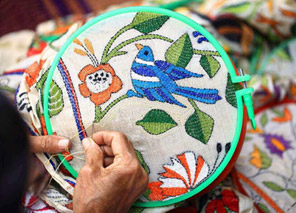
Kantha embroidery has ancient roots, with references in early Buddhist texts. Traditionally, rural women practised this domestic art. Initially, Kantha was used to transform old sarees and dhotis into comforters and blankets. Kantha was weaved by the expectant mothers and used to swaddle newborn babies. "Kantha" means "rags" in Sanskrit, reflecting its origins in upcycling old materials. Kantha needlework is traditionally done on ancient cotton sarees and dhotis. Today it is also applied to new materials like silk and cotton. Patterns often include nature-inspired motifs like flowers, birds, animals, and geometric shapes. Mythological and everyday scenes are also common. Kantha stitching strengthens rural women economically by generating revenue. Many women's cooperatives and NGOs help Kantha artisans. The historic practice of repurposing old materials is consistent with modern sustainable fashion trends.
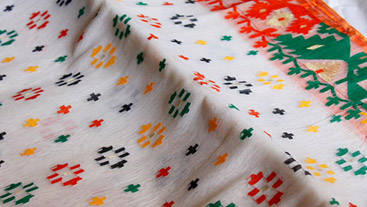
Jamdani is a traditional fabric known for its rich heritage originating particularly from Dhaka, Bangladesh and West Bengal. Jamdani weaving has existed since ancient Bengal, with historical references from the Mughal period. It is believed to have evolved from muslin weaving. The word "Jamdani" is taken from Persian, where "Jam" means flower and "Dani" means vase, referring to the floral motifs seen in the patterns. Jamdani is traditionally made of high-quality cotton, but newer variants may contain silk and other fibres. Mughal rulers and European elites highly valued Jamdani, and it was frequently used to make royal attire and beautiful fabrics. Many Jamdani weavers are women, and their craft helps them economically.
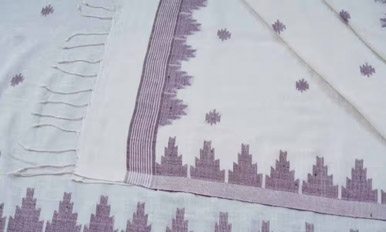
Muslin from West Bengal, especially the renowned Dhaka muslin, has a long history as one of the world's finest and most expensive fabrics. Dhaka, in present-day Bangladesh was known for making the best muslin cloth. Dhaka muslin was dubbed "woven air" or "woven wind" because of its extremely delicate and translucent texture. Jamdani is a unique Bengali muslin that weaves delicate floral and geometric designs into the fabric, providing a lovely patterned appearance. Muslin manufacturing began to fall in the late 18th century because of a variety of causes, including British colonial policy, industrialisation, and competition from machine-produced textiles. Muslin weavers and communities get government support, subsidies, and loans to help them purchase raw materials, upgrade equipment, and promote their products.
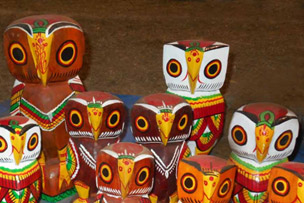
Nutangram, a village in West Bengal's Birbhum district, is famous for its traditional wooden toys. These toys are more than playthings; they represent local mythology, myths, and everyday life. The primary material is locally available wood, usually from mango, shimul (silk cotton), or gamhar (beechwood). The toys are painted in vibrant, natural colours. Vegetable dyes and natural colours have historically been used, but synthetic paints are becoming popular. Nutangram's unique craftsmanship has made it a tourist attraction. Visitors frequently visit the artists at work and purchase their handcrafted toys.
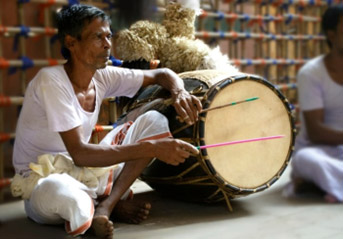
West Bengal offers a vast range of traditional musical instruments. These instruments play an important role in the region's folk, classical, and cultural performances. Ektara is a one-stringed instrument used in Baul folk music. It is played by plucking a single string against a resonator made from gourd, coconut shell, or wood. Dhak is a big drum played with sticks, often used during Durga Puja and other religious and festive events. It makes a loud, resonant sound and is an essential part of Bengali festivities. The Santhal community uses a drum called Madol, built from a hollowed wood and wrapped in animal hide. It is used in traditional tribal dances and music.
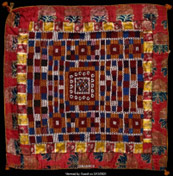
West Bengal's hill areas, especially the Darjeeling region, are renowned for their unique and diversified crafts that represent the cultural diversity and tradition of the local populations. Darjeeling carpet weaving is influenced by Tibetan and Nepalese cultures. Traditional motifs include flower designs, geometric patterns, and Tibetan symbols. The wood carvings in the hills areas are inspired by both Tibetan and Indigenous traditions. Teak, Sal, and Rosewood are popular locally sourced hardwoods. Darjeeling tea is renowned across the world, and the leaves are often packed in crafted boxes and containers made of wood or bamboo, showing local talent.
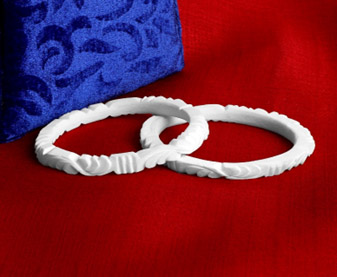
Shell craft is a traditional and complicated form of art in West Bengal that uses seashells to produce a variety of ornamental and useful products. The coastal areas of West Bengal, especially along the Bay of Bengal, are abundant in seashells, which local artists convert into beautiful pieces of art. "Shakha" bangles are traditional ornaments made of conch (Shankha) shells that married ladies wear in West Bengal and portions of Bangladesh. The craft of Shakha bangles supports many artisans, especially in areas where conch shell crafting is a traditional occupation. It generates income for these communities.
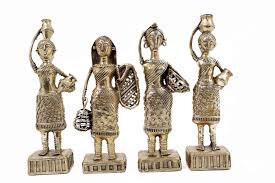
In West Bengal, dokra brass work is a traditional metal craft practiced mostly by the Dhokra Damar tribes of Bankura, Purulia, and West Midnapore district. Dokra craft has a 4,000-year history, having roots in the Indus Valley Civilization. The principal material is brass, a copper-zinc alloy known for its durability and aesthetic appeal. Beeswax, clay, and natural fibres are among other ingredients. Dokra brass work is done using the lost wax casting technique. Dokra brass items are recognized for their elaborate tribal themes including deities, animals, birds, nature-inspired designs, and geometric patterns.
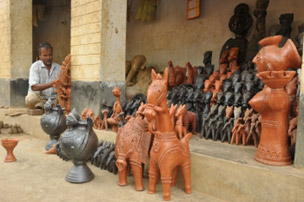
Panchmura terracotta is a popular traditional art from the village of Panchmura in West Bengal's Bankura district. The trade is historically done by Panchmura's native craftsmen, who have kept and perfected their techniques over decades. The major material used is local clay, which is known for its quality and adaptability for terracotta making. Artisans mould clay by hand or with basic tools to make figurines, ceramics, and ornamental objects. Panchmura terracotta is famous for its figures featuring gods, goddesses, mythical characters, animals, and birds.


