

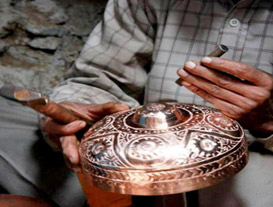
Metal Sheets most commonly brass are cut and beaten to create the form of the desired object. The base and the body of the vessel are made separately and then soldered together. The soldered joints are beaten with a hammer and the surface is scraped. The object is heated in the furnace to keep the metal soft; it is also beaten with a Mogri (wooden hammer), to remove all the dents on the surface. A mixture of Lac, buroza (gum made of rice), powdered brick powder and mustard oil is heated until the desired consistency is achieved. This paste is poured onto the metal and is allowed to solidify. The lac ensure that metal is not punctured when the engraving work is being done. After the Naqqashi is completed, the object is heated and the lac is poured out of the vessel. The usual products in demand are Lota (ritual vessel), Ghada (water pot), Patila (cooking vessel) etc.
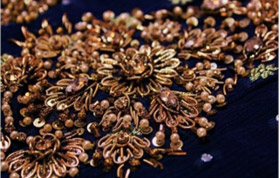
The craft, like its name, is of Persian origin. It refers to the use of gold, goldwork, silver metal wires, cords, and sequins on expensive fabrics. It was brought to India by the Mughals and was mainly used in making the attires of the Nobility, wall hangings, royal tents etc. During Aurangzeb’s reign, patronage to artists and craftsmen migrated to the neighbouring kingdoms of Rajasthan, Punjab and Gujarat. Today the fashion and garment export industry make extensive use of zardozi to embellish their products; the large demand for this form of embroidery has led to the replacement of needles for couching with a hooked needle or ari. Two forms of zardozi are practiced; Zardoso- is elaborate work done on products like heavy coats, cushions, curtains, animal trapping and shoes with heavy silk and kamadani- lighter needlework done on lightweight materials used for scarves.
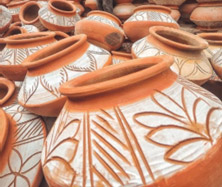
In 1971, A settlement known as Prajapati Colony was set up to house the potters of Delhi, most of whom had migrated from the neighbouring states of Haryana, Rajasthan and Uttar Pradesh. The families practice the craft and at present, there are about 300 to 400 people engaged in this craft, but many of them specialize in different style to maintain market value. After red and black clay has been kneaded into a flexible dough, it is utilised to create a variety of objects using either throwing or coiling techniques. The process of coiling is usually used to make large objects. After the product dries a bit more, it is burnished with round stones. In some cases, natural coloured clay or a diluted solution of water and red clay may be applied on the product with a cloth or sometimes dipped into clay solution to give it a painted effect. The products are completely dried and then fried in the furnace.
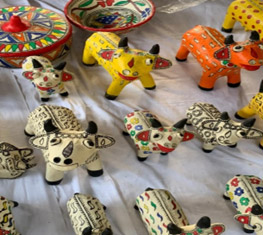
The craft of shaping and moulding products from paper pulp is practiced in many states across India, primarily due to the low cost of raw materials and tools. While the highly refined papier-mâché tradition is found in the Kashmir Valley, there are various other forms of this craft throughout India. In Delhi, the process begins by soaking paper in water until it turns into pulp. The pulp is then beaten with stone and wood, mixed thoroughly with fenugreek (methi) and wheat powder, and made into a paste. This paste is used to create the basic shape and design of the desired object. Small mirror pieces are attached to designated areas for decoration, and the product is left to dry in the sun. A colour solution from Haryana is applied to the product, which is then dried again before being coated with lacquer to enhance its strength and ensure the colour remains permanent.
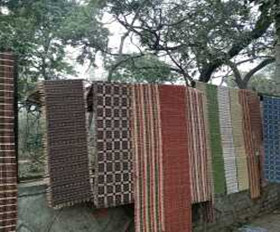
Chiks are blinds or semi-rigid window panels crafted from fine bamboo splits or rigid sarkanda grass stems, held together by spaced cotton threads. The bamboo splits, known locally as tilli, are sourced from Assam and local timber markets, while the lower parts of wild sarkanda grass stems are collected from riversides and swampy areas near Delhi and Meerut in Uttar Pradesh. Cotton threads are wrapped around the sarkanda stems or bamboo splits to create a surface that can be rolled but not folded or gathered. The edges of chiks are finished with a woven tape, called nivar, and some are lined with fabric to make them opaque. Bamboo chiks often have a waterproof backing since they are commonly used in verandahs and exposed to the elements.
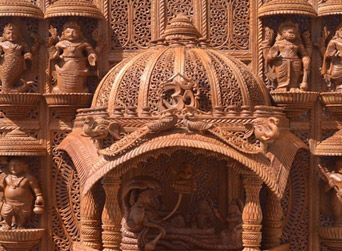
Sandalwood carving is a relatively recent craft in Delhi, originating from ivory carving traditions. When the ban on ivory was enforced in 1989, craftsmen had to switch to sandalwood. Sandalwood was chosen for its value, fine grain, and fragrance, catering primarily to the tourist market with small-scale models of monuments like Taj Mahal and chariots. Over time, due to declining sandalwood quality, artisans have shifted to rosewood. Presently, only a handful—about five to seven craftsmen—continue to practice these crafts in Delhi.
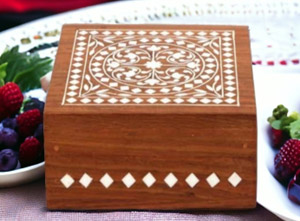
Wood inlay is a technique where a pattern is engraved onto a piece of wood, and the positive elements of the design are carved from different coloured woods or other materials. These pieces are then set into the carved recesses of the base wood using a mixture of adhesive and sawdust from the base wood, known as patti. By using various types of wood compositions are created to distinguish different elements of the design. Commonly used woods include dhudi, dark red rosewood, yellow fanas, champa, patong, lac, and maadi. After the pattern is successfully inlaid, the wood surface is levelled and a thin layer of beeswax is applied to enhance smoothness and provide a subtle gloss. Details are then engraved onto the product, and a kohl-beeswax mixture is rubbed into the engraved lines. Finally, the object is given a glossy coat of French varnish. Wood inlay is primarily practiced in the Mysore region, where the craft flourished under the patronage of Tipu Sultan. It spread to Delhi as craftsmen migrated in search of new markets. Originally, wood inlay involved using ivory and bone, but these have been replaced by various woods, acrylic, and shell.
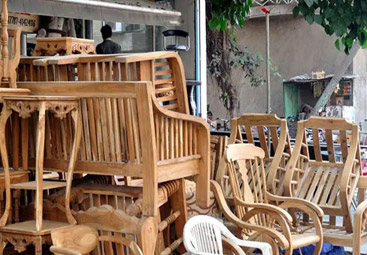
The craft of carving wood into furniture items has a long history in this region, thanks to the availability of carving and carpentry skills. In 1975, the government established a cluster of craftsmen in Kirti Nagar, an area that was once a jungle where sagwan wood, essential for their craft, grew abundantly. Today, about 50,000 to 60,000 craftsmen are engaged in this craft, working in the numerous workshops at the Kirti Nagar timber market. Each workshop has various craftsmen who specialize in different stages of the crafting process; for example, some are responsible for designing and transferring the farma (stencil) image onto the wood, others carve the wood using batali (chisels), and some sandpaper the surface. The products are sold. The primary buyers, usually emporia or showrooms, handle the polishing, painting, and finishing themselves. While many designs are imitations or adaptations from magazines and furniture catalogues, the craftsmen also create their designs, often inspired by foliage or animal forms.
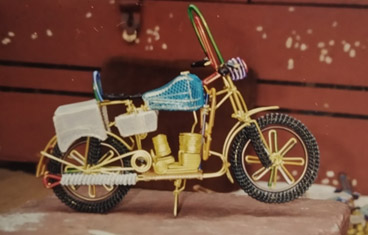
Wire Toys are crafted at Bhajanpur and Shahdara. These are also sold at Connaught Place, Red Fort and Rajghat areas. These Wire objects include detailed puzzles, scaled-down copies of Vehicles like motorcycles or rikshaws and other decorative items that are intricately crafted by the wire craftspeople. Wire crafting emerged as local crafts typically made and sold during festivals or large fairs, mainly marketed for Children. It is practiced in many places in India.
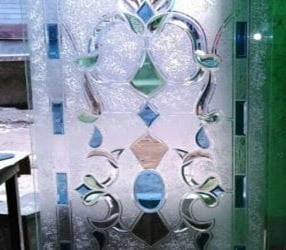
Artisans practicing crystal glass cutwork live in Bindapur extension of Uttam Nagar among other places. These crafts include the creation of decorative and functional items such as glassware, chandeliers, and decorative panels. Delhi's glass artisans utilise techniques like glassblowing, cutting, and engraving to produce intricate designs. The craft continues to thrive in Delhi, blending traditional methods with modern innovations to cater to both local and international markets.
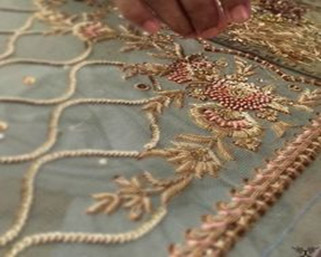
Salma sitara is a traditional craft in Delhi that involves intricate embroidery using metallic threads and sequins to adorn garments, accessories, and decorative textiles. Influenced by Mughal artistry, this craft was historically patronised by royalty and nobility. Artisans use fine metallic threads, sequins, beads, and other embellishments to create elaborate patterns on fabrics like silk, velvet, and cotton, often featuring floral motifs, paisleys, and geometric designs. Despite challenges from machine-made alternatives, the meticulous, shimmering beauty of handcrafted salma sitara remains highly sought after, especially for bridal wear, festive garments, and high-end fashion. Delhi's craftsmen continue to blend traditional techniques with contemporary designs catering to the popular demand.
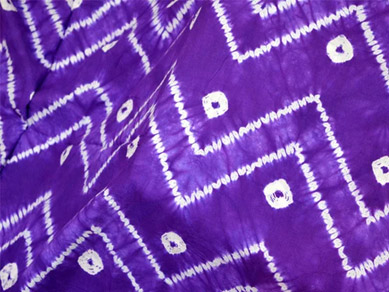
Block printers are settled in Mayur Vihar Phase I, Hari Nagar near Ashram and Mullah’ Colony. Zakir Nagar has block, screen and brush painters. Patparganj have discharge and screen painters. The work is supplied to markets in Chandni Chowk, Lajpat Nagar, Gandhi Nagar and Nehru Place in Delhi and all over India. Natural dying and shibori weaving nits can be seen in Neb Sarai.
Shibori is a type of tie-dye. Most artisans use the rope-tied technique of shibori wherein a rope is tied to a bundle of fabric. Shibori is practiced in the urban villages of Delhi, craft clusters of Rajasthan and Bhuj in Gujarat.


