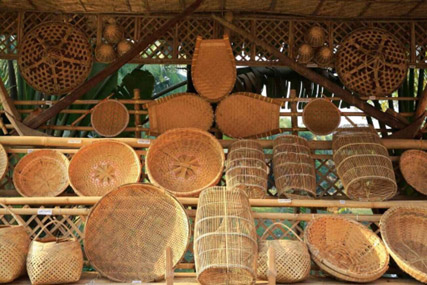
Natural handicrafts include items made from bamboo and cane, like the Tynnai handicraft. This type of handicraft is named after a village that is located in South West Khasi Hills District of Meghalaya which provides shelter to eighty-six households. The produce by the artists are mostly household items made out of bamboo like baskets, mats, stools, rice winnowers, etc. Another form of natural handicraft that is practiced in the state is by extracting fibers from pineapples. The fiber from the leaves is utilized for making nets, bags and purses. The most important center for this craft is Tynrong. Another type of natural craft is the Rattan craft, which is a type of palm vine that is used to weave into furniture and baskets.
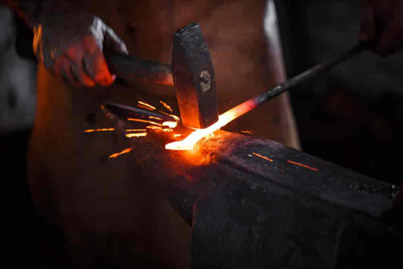
The art of blacksmithing and weaving are traditional occupations in the village of Khongtong which is situated approximately 53 kms away from Meghalaya’s capital Shillong. The place is renowned for the artistic craftsmanship and metal work that have been passed down over the generations. Blacksmiths are well known for the art of metal forging, producing tools for agricultural implements, and decorative metalwork. Another tribe that follows iron smelting and the production of iron based agricultural tools for carrying out agricultural work is the Khasi tribe. The two most important tools produced are the Mohkiew and the Waitbnoh (also popularly known as Waitkhmut) that are often used for sustainable farming.
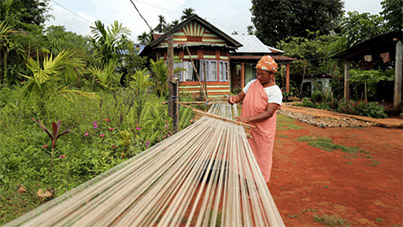
Silk weaving in the state of Meghalaya is practiced as a household activity that has its roots in its traditional past. It is home to three types of silk: Eri silk, Muga silk, and Mulberry silk. Eri silk is the major source of what constitutes the silk industry within the state. In this process, the rearing of the silk is mainly carried out by women within households. The process has been popularized by the terminology of “peace silk” as it does not entail any harm to the silkworm during the process of silk extraction. This practice is widespread within the Ri- Bhoi district of Meghalaya.
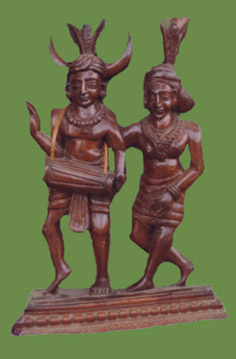
Wood carving constitutes as one of the core aspects of Meghalaya’s cottage industries. It is an ancient art form that is mainly practiced around the Garo hills. Temples and shrines are the most common places where one can find this artwork in the form of intricate designs and delicate detailing. Toys, human figurines and replicas of gods are also made from this art of wood carving. This art form has also been extended in the production of household items for decoration and utensils. Skilled artisans that have learnt the art form through their family generations also produce souvenirs by using deadwood.